In its many forms,
artwork enhances the beauty of public places, provides visual focal points for
parks and public gathering spaces, and documents the history and unique
character of our neighborhoods. The City of Madison encourages the siting of
public art in all of its neighborhoods. Through the Art in Public Places Grants
Program, the City offers opportunities for neighborhood associations to
participate in the siting of public art by developing project ideas, identifying
potential sites for public art, working with artists, and raising grant-matching
funds from residents and businesses.
Art in Public Places Grants. The Art in Public Places Grants Program provides matching grant support for public art projects developed and/or sponsored by individuals, neighborhoods, or non-profit organizations within the City of Madison. The program’s goal is to provide grant support for permanently siting public art through cooperation between the City, local artists, and neighborhood residents. There is a three-phase application process for Art in Public Places Grants. The Phase One Letter of Intent may be submitted at any time during the year prior to September 1. In Phase Two, the applicant submits a proposal for a planning grant of up to $5,000. In Phase Three, the applicant submits a proposal for a creation/ installation grant of up to $25,000. It may take up to two years to complete a public art project through this three-phase process.
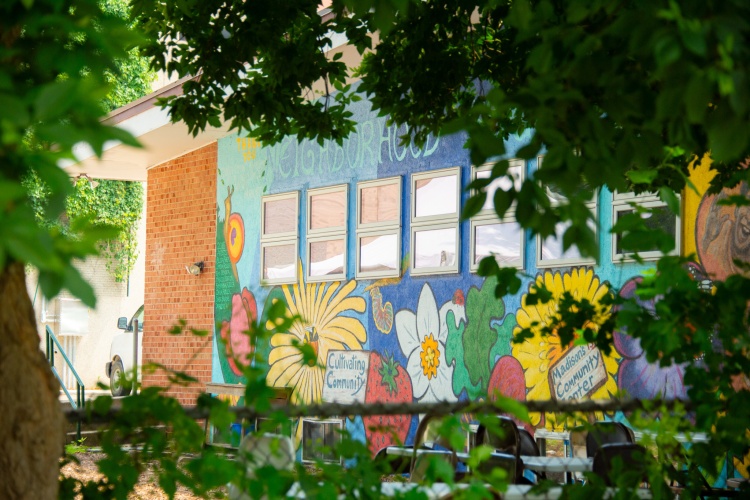
v Consider potential site(s) for works of art. Are there public places in your neighborhood that may be appropriate permanent sites for works of art? Possible examples are a mural on an outdoor wall; a sculpture or benches in a public park or along a sidewalk; mosaic tiles in a dark underpass; aesthetic street treatments; or a plaza design for urban gathering places.
v Assess neighborhood support for a public art project. Before contacting the CitiARTS Coordinator, consider the following questions: Would your neighborhood’s residents and businesses support the kind of public art project you have in mind? Would they be willing to donate funds to match grant funds? Are there residents and businesses that would be willing to form a steering committee to guide the project? Is neighborhood interest in the project strong enough that you could hold a series of meetings to develop a project design through give-and-take between neighborhood residents and artists?
v Contact your district Alderperson. Support from your district Alderperson is recommended for Art in Public Places proposals.
v Contact CitiARTS Coordinator. Contact the CitiARTS Coordinator to discuss your proposed Art in Public Places project.
v Develop a partnership with the artist(s). To help you identify an appropriate artist for your proposed public art project, the CitiARTS Coordinator can help you determine budget requirements, size and material specifications, and aesthetic criteria – vital information for artists considering your neighborhood project. The CitiARTS Coordinator can help you develop a partnership with the artist(s).
v Submit a Letter of Intent by the September 1 deadline. If you have found an artist (or artists) willing to work with your neighborhood association to site public art, the CitiARTS Coordinator will help you and the artist(s) prepare a Letter of Intent for the annual September 1 deadline. An Art in Public Places Letter of Intent must include descriptions of: 1) the proposed work of art and required materials; 2) the professional experience of the proposed artist(s); 3) the proposed site and why it is appropriate for the work of art; 4) how the work of art would enhance the location; 5) how the work of art would fit with neighborhood and City goals; and 6) a list of community individuals who would serve on a Community Advisory Board for the project.
v Prepare for Phase Two and Three applications. The CitiARTS Commission may approve your Letter of Intent, but detailed project planning (Phase Two application) and project implementation (Phase Three application) remain. The annual application deadline for Phases Two and Three is November 1. Your neighborhood association can assist the artist in these phases by distributing information about the project and raising grant-matching donations from residents and businesses.
v Monitor review process. Prior to Common Council consideration, the proposal will be forwarded to appropriate City Boards and Commissions for review. The CitiARTS Coordinator can explain the review process.
v Raise private funds and in-kind contributions to match grant funds. Private matching donations are required for Art in Public Places Grant projects. The City of Madison will fund up to one half of total project cost; the grant amount must be matched by funding and in-kind contributions from sources other than the City of Madison. One quarter (25 percent) of the non-City matching funds must be in cash; the remainder can consist of in-kind contributions of space, labor, equipment, or materials. Think of neighborhood residents or businesses that may be willing to offer in-kind contributions to your public art project.
Karin Wolf, Administrator
Planning
Municipal Building, Rm. 200
215 Martin Luther King, Jr. Blvd.
Madison, WI 53703
Phone: 261-9134 Fax: 267-8739
e-mail: kwolf@cityofmadison.com
|
“We hope that the Gateway Project will stand forever as a symbol of the best that South Madison has to offer,” proclaimed project organizers at the 1987 dedication of the South Madison Gateway – the result of over five years of partnership-building and fundraising spearheaded by the Bram’s Addition Neighborhood Association (BANA). Five years earlier, a BANA subcommittee was established to identify potential South Madison sites for beautification projects. A weeded-over, vacant lot at the intersection of Beld Street and Park Street was selected as an ideal site for a public art project to represent a gateway to South Madison. BANA invited over 200 artists from throughout Wisconsin to submit resumes and slides of their previous work. At a neighborhood meeting, residents selected seven finalists from the 30 artists who responded. After additional neighborhood meetings to review proposals, artist Ed Jeter of Milwaukee emerged as the clear favorite. Jeter’s sculpture, accompanied by attractive landscaping, was chosen for its reflection of South Madison as a place for all people (no identifiable race or class in the sculpture’s figures); a good place to raise a family (man, woman, and child figures); a proud community (the adult figures’ heads are thrown back); a community that welcomes new people (the adult figures create a gateway for the child); and a community of people working together. The project was made possible by funds from a wide range of sources, including the City of Madison Committee for the Arts (predecessor to the CitiARTS Commission), the City of Madison Community Development Block Grant Committee, and contributions from almost 200 persons and businesses. |
The performing arts,
visual art exhibitions, and cultural events enrich the social, aesthetic, and
cultural fabric of the City of Madison and each of its neighborhoods. The City
of Madison supports the performing arts, exhibitions, and cultural events
through the ARTS Grants Program.
ARTS Grants. The ARTS Grants Program provides matching grants to local artists and non-profit arts organizations for arts and cultural projects that enrich the cultural lives of Madison’s residents. ARTS has awarded grants for music; theater; dance; two- and three-dimensional visual arts; literary arts; non-profit video, film, and radio productions; photography; Madison performances of touring productions; workshops; commissioned art; and neighborhood center projects. The annual application deadline forARTS Grants is April 1. The maximum per-project grant is $2,500.
v Consider potential art projects, performances, exhibits, or events. Think of neighborhood projects, performances, exhibits, or events for which a ARTS Grant may be appropriate – such as performances or exhibits at neighborhood events, projects by local artists or arts organizations, or arts and cultural activities that benefit your neighborhood.
v Contact your district Alderperson. Support from your district Alderperson is recommended for ARTS proposals.
v Contact CitiARTS Coordinator. Contact the ARTS Administrator to discuss your proposed ARTS project.
v Submit application by April 1 deadline. The ARTS Administrator will help you and the artist(s) prepare an application for the annual April 1 deadline. A ARTS application must include a project description, artist background information, and a description of how the project would meet ARTS funding guidelines. ARTS Grant recipients are also required to provide at least one free performance, event, or exhibit to ensure accessibility of the arts for all citizens.
v Raise private funds and in-kind contributions to match grant funds. Private matching donations are required for ARTS Grant projects. The City of Madison will fund up to one half of total project cost; the grant amount must be matched by funding and in-kind contributions from sources other than the City of Madison. One quarter (25 percent) of the non-City matching funds must be in cash; the remainder can consist of in-kind contributions of space, labor, equipment, or materials. Think of neighborhood residents or businesses that may be willing to offer in-kind contributions to your project.
Karin Wolf, Administrator
Planning
Municipal Building, Rm. 200
215 Martin Luther King, Jr. Blvd.
Madison, WI 53703
Phone: 261-9134 Fax: 267-8739
e-mail: kwolf@cityofmadison.com
|
City of Madison Public Art Sculptures Most public artists derive their inspiration for a public work of art from the history of the site and from the input of the neighborhood residents. Throughout time, art in the public domain visually documents some aspect of the history, culture, or spirit of the place in which it resides. Below is a list of public art pieces in Madison for you to enjoy. |
||
| Public Art
Act Alexa Amphitheater in the Plaza Annie C. Stewart Memorial Drinking Fountain Content: James A. Graaskamp Fiddleheads Great Spirit Hieroglyph Living the Dream Otis Redding Memorial Benches South Madison Gateway Project Spare Time Spring Statue of Liberty Sunbathers Timekeeper Untitled Untitled Mural |
Artist
William King Susan Walsh L. Brower Hatcher Frederic J. Clasgens Michael A. Burns Sylvia U. Beckman Harry Whitehorse O.V. Shaffer Frank Brown Ross Ishikawa Edgar Jerome Jeter John Martinson Sylvia U. Beckman Frederic Auguste Bartholdi Marie Michie Robert Curtis Alan Tollakson Richard Haas |
Location
Olbrich Park Kerr-McGee Park Carroll and Mifflin Streets Erin & Wingra Streets 1945 E. Washington Avenue Olbrich Garden Lakeland and Maple Avenues Downtown Library Madison Municipal Building Monona Terrace Roof Garden Beld & Park Streets 10 block of W. Main Street Olbrich Sunken Garden Warner Park Olbrich Park Law Park Olbrich Garden John Nolen Underpass |