Common Terms and Categories

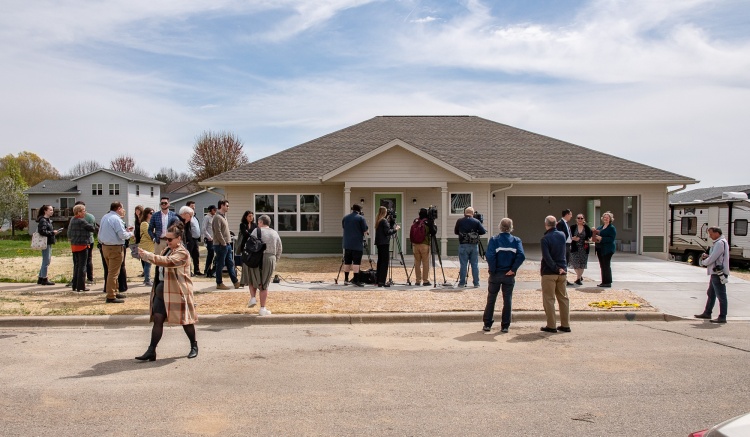
Media and community members gather outside of an affordable housing ribbon cutting event

(Note: This page is part of the 2025 Housing Snapshot report)

The 2025 Housing Snapshot shows data in a number of ways to better track Madison's housing trends and needs. Here are common terms and categories found throughout the report:

Home

Throughout this report, “home” is used to represent all types of housing. When a description of building size is relevant, the term “unit” is sometimes used interchangeably.

Housing Tenure

  • Renter households pay rent to a property owner for their home. “Renter-occupied” or “rental” housing exists in a wide variety of building types.
  • Owner households own or pay mortgage costs to a lender for their home. “Owner-occupied” or “ownership” housing exists in a variety of building types.

Area Median Income

Household income is generally categorized based on Dane County median incomes, since the Wisconsin Housing & Economic Development Authority (WHEDA) utilizes county median incomes to generate annual income and rent limits for affordable rental housing. (The report also utilizes City of Madison median incomes reflected in U.S. Census data.)

We hope readers take a close look at the table below and the “Example Households” to gain a better sense of how housing fits into the realities, choices, and challenges facing Madison households in 2025. Based on the income categories by household size established by Housing & Urban Development (HUD) and WHEDA, the report categorizes households as follows:

  • 100% AMI Median Income

    Generally don't qualify for housing subsidies

  • 80% AMI Moderate Income

    Can sometimes qualify for subsidized housing

  • 30-60% AMI Low to Moderate Income

    Can qualify for subsidized housing

  • <30% AMI Very Low Income

    Can qualify for deeper housing subsidies or rental housing vouchers (when available)

2025 Income Thresholds by Household Size, Madison, WI
Threshold1-Person2-Person3-Person4-Person5-Person

30% AMI

$27,270

$31,170

$35,070

$38,940

$42,060

50% AMI

$45,450

$51,950

$58,450

$64,900

$70,100

60% AMI

$54,540

$62,340

$70,140

$77,880

$84,120

80% AMI

$72,720

$83,120

$93,520

$103,840

$112,160

100% AMI

$90,900

$103,900

$116,900

$129,800

$140,200 

Race and Ethnicity

Just four U.S. Census categories for race and ethnicity are tracked in this report due to data limitations for households in other racial and ethnic categories. U.S. Census terms are used throughout the report, including Asian, Black, White for race and Hispanic / Latino for ethnicity. Unless otherwise noted, data by race should be assumed to be for households who are non-Hispanic / Latino.

Housing Cost Burden

Throughout this report, homes are considered “affordable” so long as less than 30% of one’s income is spent on housing costs.

Housing affordability interacts with other factors and means different things to different households, but this 30% threshold drives most state and federal housing policies and programs.

  • Housing Cost Burdened—descriptor of households spending over 30% of their income on housing costs, including utilities.
  • Severely Housing Cost Burdened—descriptor of households spending over half (50%) of their income on housing costs, including utilities.

Additional definitions are available in the City of Madison Housing Strategy Committee's Affordable Housing Glossary.

See more definitions

Was this page helpful to you? * required