
Rezoning Planned Development Zones: Two Chances to Learn More
posted 
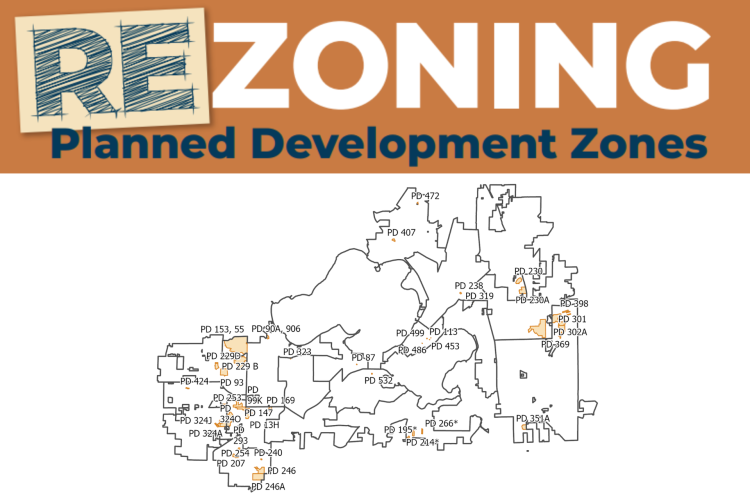
City of Madison map showing the location of Planned Development zones across the city

The City of Madison is looking to rezone several single- and two-family Planned Development (PD) zones across the city into conventional residential zoning districts. City staff will be hosting two virtual public information meetings to explain this effort and how it may benefit property owners. 

Residents interested in learning more can register to receive a link to one of the two virtual meetings, which will be held on:

What are Planned Development zones? Why do we have them? 

Planned Development (PD) zoning creates unique, site-specific land use and development rules for each PD zone. A PD in one neighborhood may have completely different requirements for building height, setbacks from property lines, and design review processes than one in another neighborhood. This is different from conventional zoning districts, which are outlined in the City's zoning code and can be used in various similar areas throughout the city.  

PD zones were a commonly-used tool before the City of Madison updated its zoning code in 2013. PD zoning became popular in the 1980s under the previous outdated zoning code, as it gave alders, neighborhood stakeholders, and developers a tool to better control development details in new neighborhoods. PD zoning had the benefit of allowing entire neighborhoods to be designed at once, but those benefits were up front – with the trade-off that even small, incremental changes to a home as it ages can be burdensome to get approved. 

Why rezone these PDs?

  • Architectural Review Boards and Other Additional Review Processes

    Some PDs require small changes to a property (like adding an egress window or a deck) to get approval from a non-governmental architectural review board before receiving a building permit from the City of Madison. City staff typically do not have access to who serves on these boards or how to contact members, and these boards have the ability to reject property changes that would otherwise be allowed.

    Other PDs require the district alder and Department of Planning and Community and Economic Development Director to approve any changes to properties and for the change to be recorded with the Dane County Register of Deeds. 

    It is much more straightforward – and less time-consuming – for property owners to make changes to their property if it is in a conventional zoning district. 

  • Lack of Transparency

    Each PD having its own unique rules and regulations makes it difficult for property owners to find answers to questions about what they can do with their properties when their questions would otherwise be answerable on a webpage if their property was conventionally zoned. Because each PD is different, Zoning staff must individually search through files that are often hundreds of pages long to answer resident questions.

  • Lack of Equity

    Because PDs are virtually locked into the requirements they were created with, they do not get the benefit of changes that are made to the zoning code, like the series of Housing Forward changes that were made to the zoning code in the past few years. This was an issue that was highlighted by alders when those changes were approved. Rezoning PDs to conventional zoning districts will bring those opportunities to thousands more properties across the city.

Who does this affect?

Right now, there are about 4,000 single- and two-family homes in PDs that are proposed to be rezoned. 
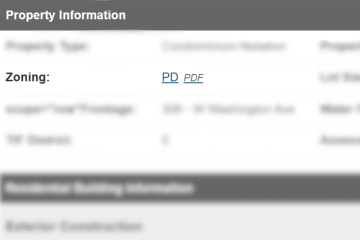
Screenshot of search results from the property lookup tool highlighting property zoning

You can check to see if your property is in a PD or in a conventional zoning district by using the Assessor's Office's Property Lookup tool. The tool will list the zoning district of a property under the “Property Information" section. 

A list of properties to be rezoned and what their proposed conventional zoning districts will be is posted online. Residents whose property is currently in a PD zone can refer to the full list, which is sorted alphabetically by street name, or the webpage for this project to find their proposed new zoning designation.

In determining these proposed changes, Zoning staff worked to select conventional zoning districts that – as much as possible – match the required setbacks and lot sizes in the PD and are consistent with the existing built condition of buildings in the PD zone.

You can learn more about the benefits of rezoning from a PD to a conventional zoning district on the City of Madison's web page on the topic. 

Was this page helpful to you? * required