Recognizing Housing Rhetoric
postedCampaign Promise! Promise Kept!
Since 2021, housing has been one of my main priorities. Over the past several years, I've worked with City staff, the Mayor's Office, and my colleagues on the Common Council to push for zoning code changes and expand housing choices across Madison.
This work didn't happen overnight, and it didn't happen with one ordinance. It has been an ongoing effort to look at how our zoning rules affect land use, and who gets to live in those spaces.
The changes we've made have been covered by local media, shared through City communications, and discussed here on District 10 blog. I've shared what we are changing and why.
It shouldn't be a surprise to anyone that I support more housing choices across the city and county. The housing shortage is not just a Madison City Council talking point but a national issue that communities across the country are working to address.
Madison and Dane County have an opportunity and a responsibility to keep moving forward on housing solutions that help people find homes that meet their needs at different stages of life.
What does that mean for District 10?
District 10 has a disproportionate amount of land dedicated to low-density, single-dwelling development. That means our existing housing pattern does not provide the same range of housing choices found in other parts of the city.
The zoning changes we have made allow for more gentle density while maintaining the general scale and feel of our neighborhoods.
That can mean allowing another home where there was previously one (duplex conversion), creating an accessory dwelling unit, making it easier to build different types of housing, or using existing properties more efficiently.
These changes are not about turning every neighborhood into a high-rise district. They are about making room for more people and more housing choices within existing communities.
Zoning changes
In the next section you will find a list of the zoning-code changes made over the past several years that have helped expand housing choices.
What can I do with my property?
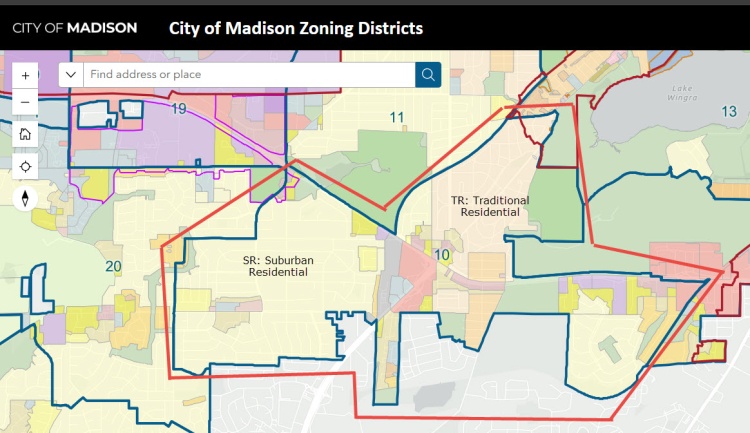
Want to know what the zoning code allows on your property?
Click the map below to open the City of Madison zoning map. You can search your address and see the zoning designation and other information that applies to your property.
Housing has been one of my promises since I first ran for Alder in 2021.
I'm proud of the work we've done so far!
-
City of Madison Housing Tracker

Two ways to get more details about a specific property,
- Zoom in to the property
- Hover over the dot to see the unit information
- or right-click the dot and select "Show Data Point as a table.
- Zoom in to the property
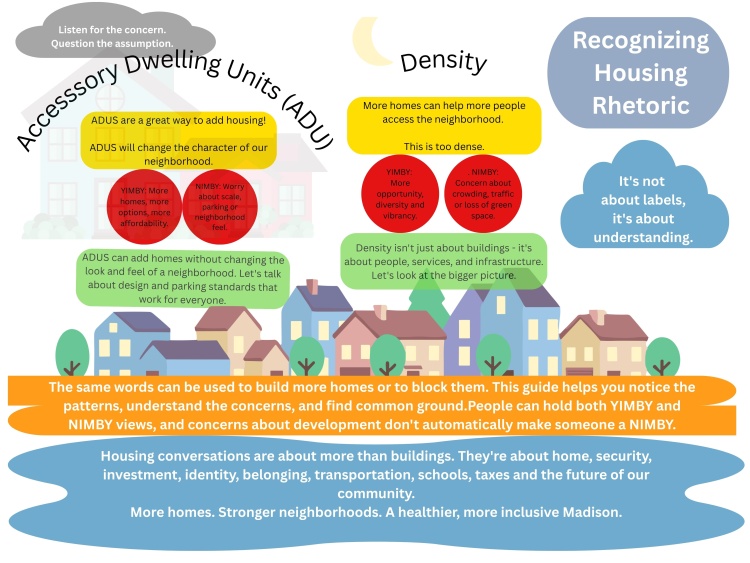
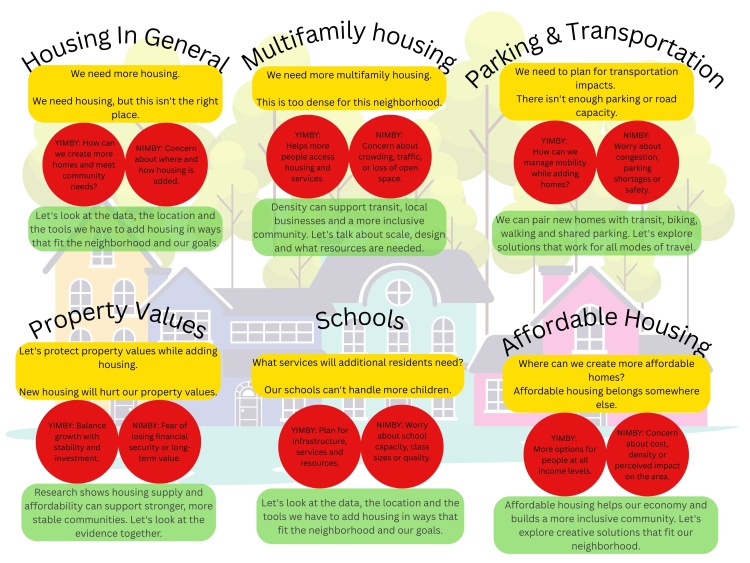
Recognizing Housing Rhetoric
Housing conversations are complicated. Density, parking, neighborhood character, property values, and affordability mean very different things for different people.
This infographic is not about labeling people as YIMBY or NIMBY. It is about recognizing recurring patterns in housing conversations and understanding the concerns underneath them.
Someone can support more housing and still have legitimate questions about traffic, design, infrastructure, or neighborhood impacts. Someone can oppose a particular project without opposing housing altogether.
Listen for the concern. Question the assumption. Look for a solution.
At the heart of every housing conversation are people, neighborhoods, and the question of how we make room for the community we have today and the community we are becoming.