
Plant of the Week: Celandine Poppy
posted
Written by Hailey Collins, Greenway Conservation Trainee
Looking for a striking flower to fill a small shady spot in your garden? Celandine Poppy (Stylophorum diphyllum, also known as “Wood Poppy") might be just what you're looking for. This striking native plant produces multiple yellow-orange flowers that are long lasting. Within the stem is a similarly toned sap that was used as a dye by local indigenous tribes. If kept in its preferred moist soil, Celandine Poppy's unique leaves will remain throughout the fall. Its leaves are a contrasting blue green that has multiple lobes and soft veining. With frequent deadheading, flowers will continue to bloom throughout spring and summer. It is a perennial so you can be sure that it will grace your garden year after year!
Beware of Celandine Poppy's non-native lookalike, Greater Celandine (Chelidonium majus). Before bloom, the Poppys are almost identical and difficult to distinguish. You can however identify the difference between native and non-native by their seed pods. Our native celandine poppy's seed pods are larger, oval-shaped fuzzy pods that dangle below the leaves, while Greater Celandine seed pods are narrow and stem-like and point upwards. When the seeds are ripe, the pods on the wood poppy split open, dropping seeds and leaving the remaining pod resembling an open banana peel.
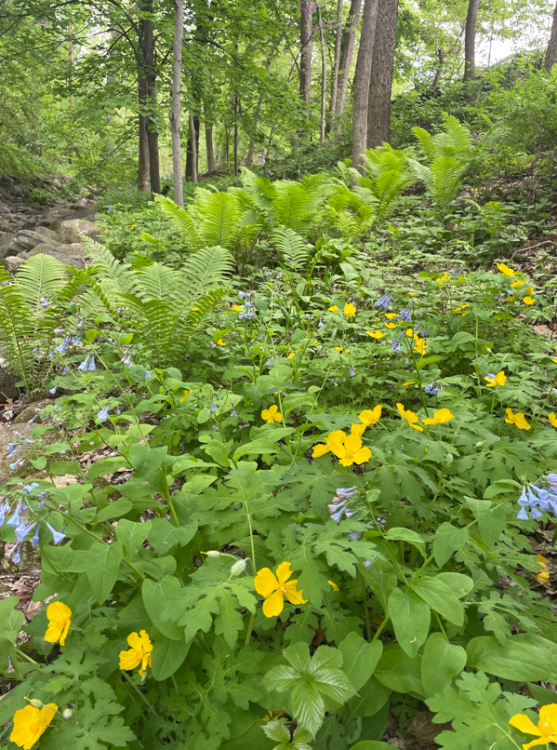
Celandine Poppy stays confined to its spot but is easily divisible and can be sown by seed, giving you free plants to share with friends and family!
This content is free for use with credit to City of Madison Engineering.