
What to Know About the New Men’s Shelter
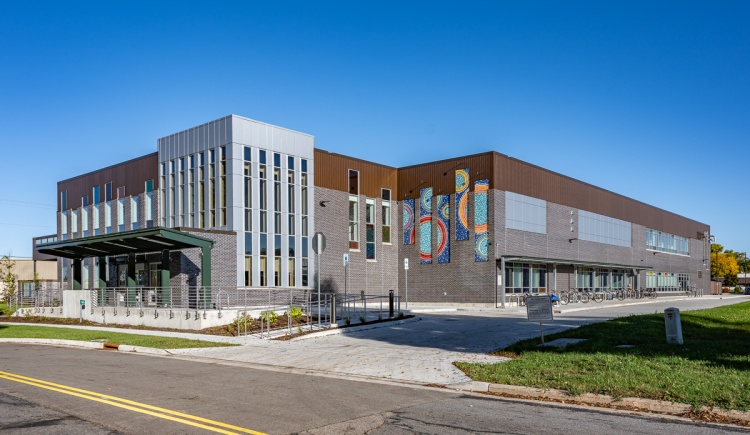
Dane County's first-ever purpose-built men's shelter opened on September 1, 2026. It is located on Madison's east side, at 1904 Bartillon Drive. It will be operated by Porchlight, Inc.
Relying primarily on funding from Dane County and the City of Madison, the new facility is first opening as an overnight shelter, operating on the same schedule as the previous emergency men's shelter located near East Towne Mall on Zeier Road.

While the shelter was built to eventually operate 24 hours a day, it will be possible to do so only when funding for the added operating costs is raised from non-government sources. A private fundraising group, Shelter Friends of Dane County, is leading efforts in the community to ensure that Porchlight has the money it needs to operate on a 24/7 basis.
Those efforts are proceeding, with a goal that staffing is in place for full day operations before the end of 2026. Every donation made to Shelter Friends of Dane County ensures that the building will be used to its full potential and able to offer around-the-clock services to help create a pathway to housing for those most in need.

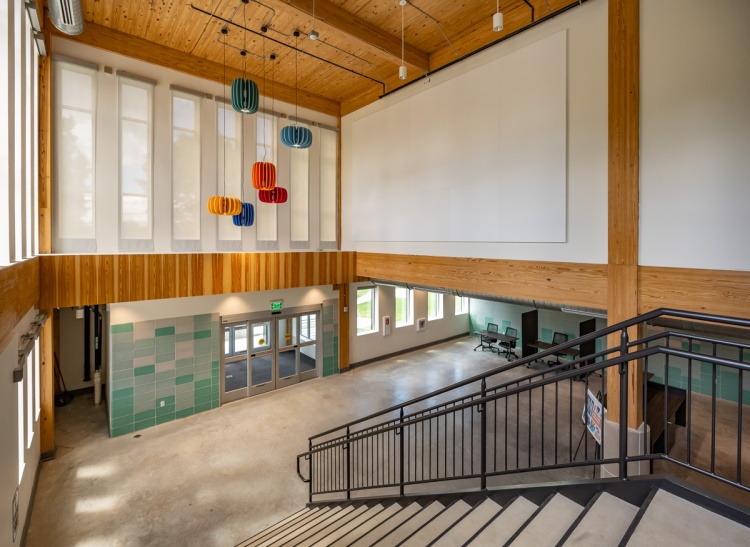
Entrance and intake area

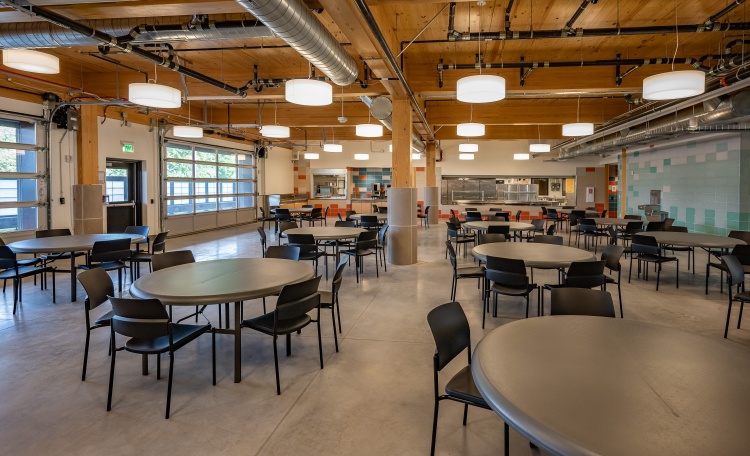
Kitchen area

Kitchen area and coffee station

Commercial kitchen space

Meeting room with capability for virtual meetings with service providers

Workspaces for donated computers for shelter guests

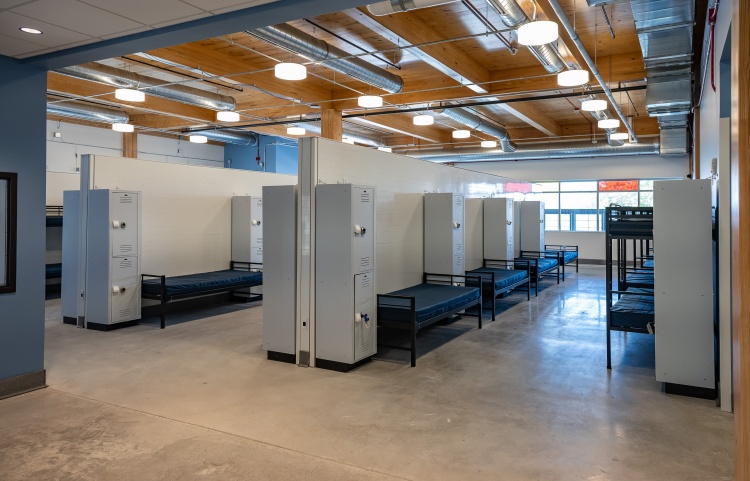
Sleeping pods with lockers to store belongings

Each bed comes with a locker and an electrical outlet for charging devices
- $13.5M toward construction of new shelter
- $1.7M annual commitment to new shelter operations
- $15M annual commitment to Affordable Housing Fund
Frequently Asked Questions (FAQ)
Shelter Capacity
What is the new shelter's capacity?
The shelter has capacity to serve up to 250 people overnight.
This capacity is on the high end of what is considered best practice for shelters of this type across the country. At this level, we can better manage the needs and safety of all guests and staff.
Why was a 250-bed shelter built if more people have been using the current shelter?
Several factors influenced the decision to build a 250-bed shelter.
A staff team consulted with a number of facility operators in other states. They cautioned that larger shelters present added safety and security challenges and make it more difficult to maintain quality services. Their consensus was that a 250-bed facility was on the higher end of the spectrum.
Cost considerations also influenced the decision to set capacity at 250. The engineering consultant concluded that additional space needed to accommodate more beds and associated bathroom facilities would have required a third floor, which would have significantly increased both construction and operating costs.
Can the shelter exceed its capacity?
The new shelter was designed to serve a maximum of 250 people. Unlike the temporary shelter on Zeier Road, which occupied a single-story structure with a large open space and multiple exits, the new two-story facility's layout does not allow it to exceed capacity.
The purpose-built shelter was designed to ensure greater safety and a more trauma-informed environment in which to support unhoused men. The building provides more space for on-site supportive services, multiple smaller sleeping areas for more privacy and improved shower and bathroom amenities that have not been possible in previous shelter settings.
The operating budget reflects the cost to support a 250-bed capacity. While the new facility is built to serve 250 men each night, the shelter is expected to serve more than 1,500 different people over the course of the year.
How will the shelter's capacity affect operations?
The new shelter functions differently than shelters in Dane County have in the past. There will be greater emphasis placed on helping guests return to housing. This will not be a drop-in shelter that men use to meet nightly needs. Instead, it will rely upon a bed reservation system that allows the facility to focus on serving the most vulnerable members of our community.
Once assigned a bed, guests will be able to return each night knowing they have a bed waiting for them. But they will also have expectations placed on them while using the shelter – namely that they are looking to secure housing.
Shelter Operations
Who will operate the new shelter?
Porchlight, Inc., the local non-profit group that has operated the men's shelter in Madison for over 40 years, is operating the new shelter. While Porchlight will be the primary operator, it will also collaborate with other community partners to bring an array of services to shelter users.
Why are changes being made in how the shelter operates?
The operational changes are designed to place greater emphasis on supporting guests in their search for housing. They are intended to help people get out of the shelter and into housing more quickly so that the shelter can serve more people. These policies align closely with the community's goal of making homelessness brief, rare, and non-recurring.
The shelter is not housing and is not intended to serve as a long-term substitute for housing. Its purpose is to offer a safe and welcoming — but temporary — place for unhoused men to stay and where they can get help to return to housing.
How long can someone use the new shelter?
The new shelter has a housing-focused mission. Its purpose is to provide short-term use to guests who need shelter and to help them get into housing. Once registered and assigned a bed, guests can continue to use the shelter as they continue their search for housing.
Guests will be expected to prepare and work on an individualized housing plan with help from on-site case managers. If after 90 days in the shelter a guest has not found housing, they will be required to work with case management on a housing plan and to demonstrate progress if they wish to continue using the shelter. If guests choose not to engage with case management, they may be asked to leave the shelter.
To be clear, no one will be asked to leave shelter just because they are unable to find housing. However, someone who has used shelter for 90 days without finding housing and who chooses not to work with case management may be asked to leave.
Also, if a guest leaves the shelter in the morning and does not return that evening, that bed will be offered to the next person on the wait list and the person that left will need to re-add their name to the wait list.
How were decisions made about who got a bed when the new shelter opened?
Utilization levels at the temporary shelter on Zeier Road exceeded capacity at the new shelter. That meant it was not possible for everyone that used the Zeier Road shelter to move to the new shelter when it opened.
Porchlight used a registration system designed to ensure that the initial beds available went to those who most needed them. Under this system, Porchlight assessed anyone that has used shelter during the 90 days previous to the new shelter opening. The assessments to determine each person's severity of need used information about that person that had already been collected and stored in a local database.
The need assessments gave greater weight to a person's age (with highest consideration given to persons age 65 or above), any specific health or medical needs (for example, dependence upon medical equipment like oxygen tanks, or wheelchairs), how long they had been using shelter, and other related factors. The registration system gave greatest consideration to older men and those with medical needs.
Anyone using shelter who was not offered a bed when the shelter opened, or who becomes homeless afterwards, has the opportunity to add their name to a wait list to be used to fill future openings.
How will somebody find out if they are able to stay at the shelter?
Porchlight provided written notification to men who, based on Porchlight's needs assessments, were registered and assigned a bed at the new shelter when it opened. Those notifications went out well before the new shelter opened.
Porchlight will contact people on the wait list when beds become available. Men on the wait list should keep their phone number and/or email address up-to-date with a day shelter (The Beacon, Down for Change, Safe Haven) or provide other ways they can be contacted.
What does it cost to operate the shelter?
The cost to operate the shelter in 2026 on an overnight basis is about $3.5 million. That figure includes both the cost to operate the temporary shelter on Zeier Road until the new shelter opened on September 1, 2026, and the cost to operate the new facility for the remainder of the year.
The budget provides funds to pay for staff, meals, laundry, cleaning, utilities and building maintenance. Funding to support shelter operations comes primarily from the City ($1.7 million), County ($1.4 million), Porchlight ($200,000) and the State ($150,000).
There is additional cost associated with operating the new shelter on a 24/7 basis. Specific budget estimates are still being prepared. The added costs of the full-day operation will need to be paid for from non-government sources. Efforts to raise those funds are being coordinated by the Shelter Friends of Dane County.
Shelter Background
Why was a new shelter built?
For 35 years, the men's shelter in Dane County operated out of church basements in downtown Madison. Their combined capacity reached about 165 men during the most extreme weather conditions. In March 2020, the COVID-19 pandemic exposed the deficiencies of those spaces and ultimately forced their closure. City and County leaders moved quickly to set up alternative temporary spaces, utilizing emergency federal funding.
This public health emergency convinced City and County leaders to commit to work together to design and build a new shelter that could serve unhoused men safely and with dignity.
In designing the shelter, officials sought input from the community, from homeless service providers and shelter staff, and from people with lived experience about features they believed most important to a successful shelter. Many of their suggestions are reflected in the new shelter — both with respect to the building's design and its ability to help connect guests to housing-focused services.
Who built the shelter? What did it cost?
The construction of the shelter was a collaborative effort between Dane County and the City of Madison. The City acquired the property at 1904 Bartillon Drive and the Madison Common Council designated it as the site for the shelter in April 2022.
Working with Dimension IV, a local architectural consultant, a project team comprised of staff from the County, City, and Porchlight spent the next year gathering community input and designing the building. The Common Council approved design plans in December 2023 and construction began shortly after that.
The project cost, including land acquisition, building design and construction, totaled about $27 million. The project was financed with funds from the City of Madison ($13.5 million), Dane County ($10.5 million), and the federal government ($3 million).
What improvements will people notice in the new design?
The one-story, 30,000 square foot structure on Zeier Road that had served as a temporary men's shelter since 2022 was replaced by a two-story, 42,000 square foot building on Bartillon Drive.
In designing the new shelter, the project team put together a significant outreach effort and incorporated results from a Trauma Informed Design Report to ensure the space can provide quality services in a healthy and dignified way. Some of the key features of the new shelter include:
- A combination of single and bunk beds, which are divided among six rooms. This is different from the current model in which all beds are placed together in a single large space. The use of smaller rooms, each of which will contain 40-50 beds, will help reduce noise and make the spaces more manageable.
- Full bathroom and shower facilities.
- Each bed is equipped with a locker, where guests can secure their belongings, and electrical outlets.
- Meeting rooms in which shelter guests can work with service providers on their housing plans.
- Secure outdoor spaces.
- A commercial-grade kitchen in which the operator can prepare meals and also provide employment training opportunities.
- A geothermal heating and cooling system and solar panel array that will reduce energy costs.
What will happen to the shelter on Zeier Road when the new shelter opens?
The shelter on Zeier Road was set up to be used only until the new shelter could be built. The Zeier Road shelter was closed on the morning of September 1, 2026, as operations transitioned to the new shelter.
Why can't the Zeier Road shelter stay open to serve as an overflow shelter?
The City of Madison does not have funding to support both the new shelter and the continued use of the Zeier Road facility. Also, the Zeier Road property has been open longer and used by many more people than what had been expected. As a result, the building is in need of maintenance and repairs that would need to be made before its continued use could be considered. There is no money budgeted for such repairs.
Dane County's 2026 Operating Budget includes $440,000 to support an overflow shelter. Since that level of funding is not sufficient to support a year-round overflow shelter, if one is established, it would likely operate only during cold weather months.
-
Church Basements Completed
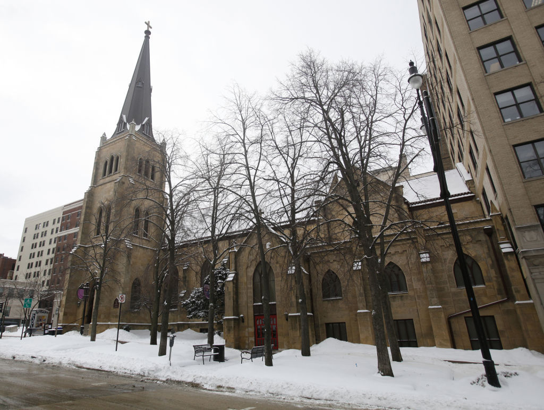
Background: For more than 35 years, the basement of Grace Episcopal Church in downtown Madison was the primary shelter space for men experiencing homelessness, with overflow space available at St. John's Lutheran Church and First United Methodist Church. Men were limited to only using the shelter 90 nights per year, but the limit was lifted on nights with extreme weather.
Average: 92 guests per night
High: 163 guests (November 14, 2019)
-
Warner Park Temporary Shelter Completed
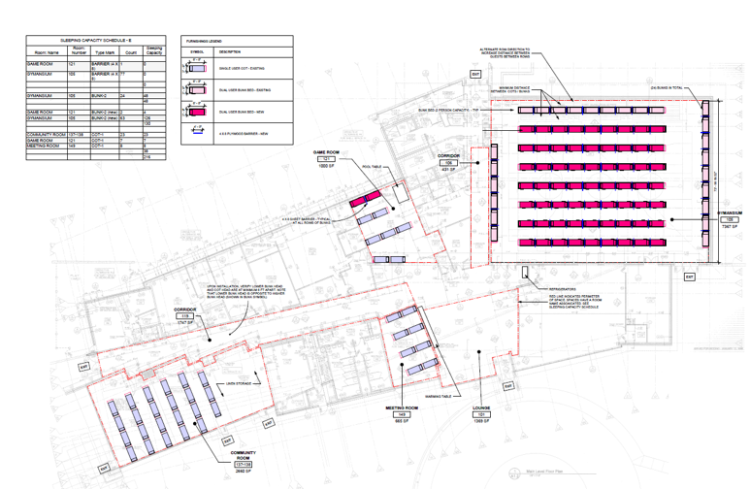
Background: Public health risks due to the COVID-19 pandemic necessitated changes to the way homeless men were sheltered. The City of Madison's first temporary shelter was located at the Warner Park Community and Recreation Center, and overlapped with Dane County's Vulnerable Population Hotel Program. Cots and bedding were donated and Madison Metro provided daily transportation to the temporary shelter space. Health screening was added at intake, and the 90-day limit was removed as part of an effort to convince people who needed shelter to use it.
Average: 81 guests per night
High: 110 guests (October 19, 2020)
-
First Street/Fleet Building Temporary Shelter Completed
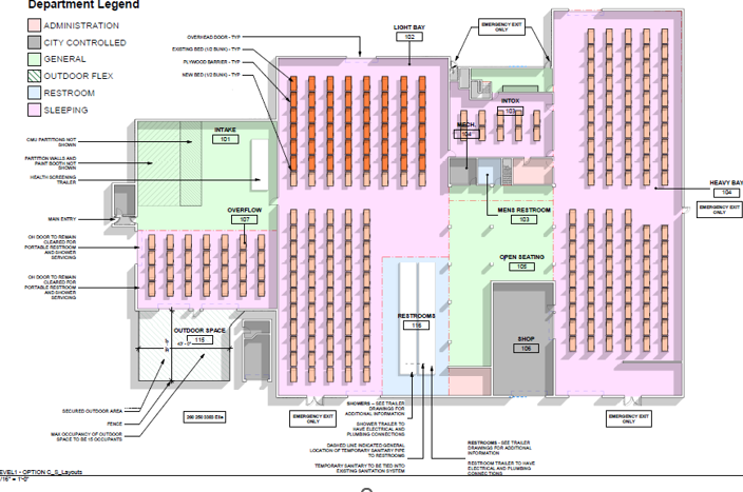
Background: The former City Fleet building on First Street became the new temporary shelter location by the end of 2020, offering more space and capacity.
2021 Average: 99 guests per night
2021 High: 139 guests (November 10, 2021)
2022 Average: 151 guests per night
2022 High: 207 guests (September 28, 2022)
-
Zeier Road Temporary Shelter Completed
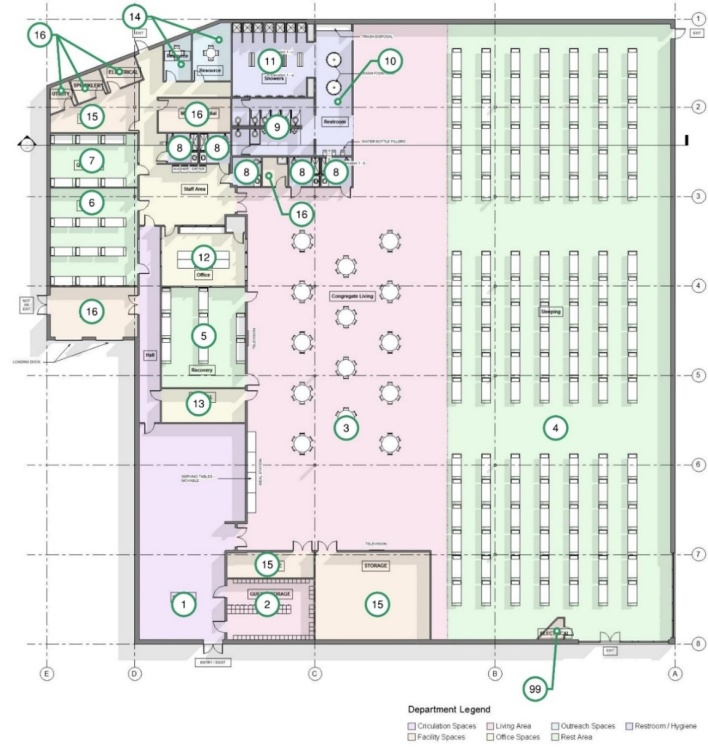
Background: As the City of Madison moved toward construction of the Madison Public Market at the First Street location, the City acquired a former retail space on Zeier Road to serve as the temporary men's shelter. The Zeier Road location provided even more capacity than the Warner Park and First Street locations. Not only did more people use the Zeier Road location, but they were using it for longer periods of time.
2023 Average: 224 guests per night
2023 High: 299 guests (December 19, 2023)
2024 Average: 279 guests per night
2024 High: 347 guests (January 22, 2024; December 11, 2024)
2025 Average (through June): 304 guests per night
2025 High (through June): 363 guests (February 17, 2025)
-
Bartillon Drive Purpose-Built Shelter Active
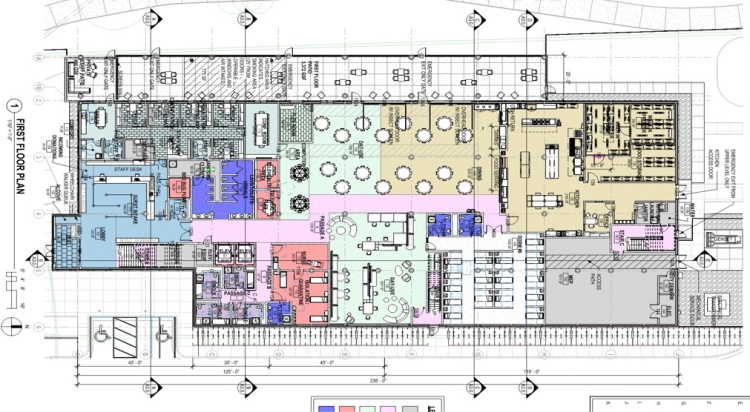
First Floor 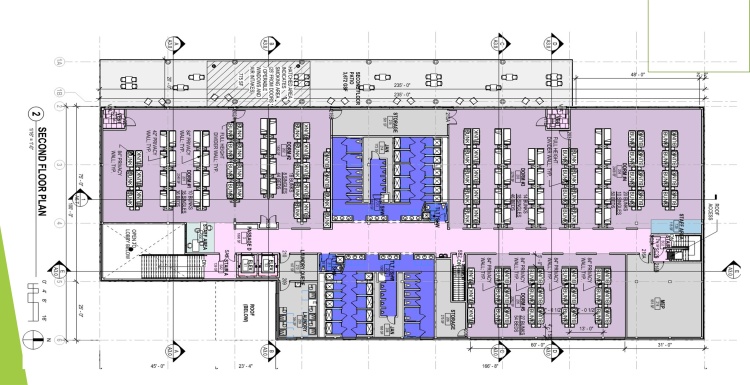
Second Floor Background: This is Dane County's first-ever purpose-built men's shelter and is located on Madison's east side, at 1904 Bartillon Drive. The two-story, 42,000 square foot building is be able to serve up to 250 people per night and was designed to provide 24/7 service, including potential job training and support in finding housing.
A combination of single beds and bunk beds are split into six different smaller rooms, providing guests with more quiet and privacy than the drop-in emergency model that congregated everyone into a large single space. Each bed comes with its own locker, allowing guests to secure their belongings if they need to leave the shelter during the day, knowing they will still be there when they return in the evening.