


Water Quality
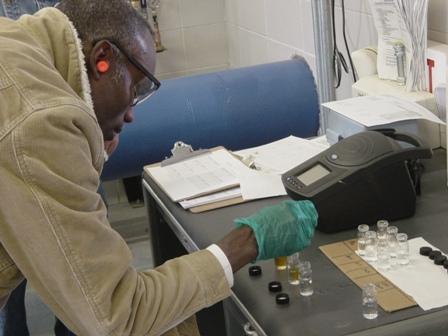
Madison Water Utility takes the quality of our water very seriously. We routinely collect more samples and run more tests than are actually required by the EPA and DNR.
Our drinking water more than meets all federal and state drinking water standards. Take a look at the latest annual Annual Water Quality Report to learn more.
What’s the water quality like in your home? Finding out is as easy as typing in your address.
Water quality concerns? Call our Water Quality Department at (608) 266-4654.
Water Utility Facilities
The City of Madison drinking water system consists of 20 active wells, 33 reservoirs (including seven elevated water towers), and over 900 miles of interconnected water transmission and distribution mains. Madison Water Utility pumps ground water from a deep sandstone aquifer. Wells are 500-1100 feet deep and deliver water to localized regions of the city.
Discolored Water
We regularly flush our water mains in the spring and summer months to push out naturally occurring iron and manganese sediment that comes from our aquifer. But that action -- or any other disturbance like fire suppression, a main break, contractor work, or a flow test -- can temporarily stir up the sediment that causes discolored water. If your water becomes discolored, run a cold water tap in the basement at full force until the water clears. Usually it clears in just a few minutes.
Disinfection
Chlorine is used in very small amounts to destroy harmful water-borne viruses, bacteria and microbes. MWU tests the water daily at every well to ensure chlorine levels are maintained as closely as possible to the required 0.3 parts per million.
Fluoride
MWU began adding fluoride to Madison's water in 1948 at the direction of the Common Council. The move was part of a city policy to reduce the risk of dental cavities, particularly for children with little access to routine dental care. Madison Water Utility currently follows the recommendation of Public Health Madison Dane County (PHMDC) with regard to fluoride levels added to drinking water.
More questions? Take a look at the 2020 PHMDC policy statement on Fluoridation of Public Drinking Water posted on their website.
PFAS
Low levels of PFAS have been detected at half of Madison’s wells. The State of Wisconsin requires that levels of two PFAS (PFOA & PFOS) in drinking water be no higher than 70 ng/L or parts per trillion. The US Environmental Protection Agency recently proposed limits on six PFAS in drinking water that are much lower than the Wisconsin standard. However, all active wells in Madison are in compliance with this stricter federal standard. Find out more on our Perfluorinated Compounds information and testing page.
Chromium-6
Chromium-6 has been detected at low levels (less than 2 parts per billion) in 14 of Madison's 22 wells. In 2014, California was the first state in the nation to establish a regulatory standard for chromium-6, which was set at 10 parts per billion (ppb). Right now, there is no federal regulatory standard for the substance. Find out more on our Chromium information page.